The Original 2019 Rocky Mountain Industrials Mine Expansion Proposal
In 2018, Rocky Mountain Industrials (RMI) shocked the Glenwood Springs community by announcing its plans to vastly expand the existing limestone quarry on Transfer Trail.
The quarry is located on public lands that are managed by the U.S. Bureau of Land Management. It lies directly north of the city of Glenwood Springs, and is accessed via Transfer Trail.
The quarry was first developed in 1982 by Mid-Continent Resources. At the time, Mid-Continent operated underground coal mines in Coal Basin, west of Redstone. Mid-Continent used the quarry’s high-grade limestone to control methane gas in the coal mines.
Mid-Continent’s coal mines closed in 1992. The limestone quarry went dormant for several years. Mid-Continent later sold the operation to CalX Minerals.
RMI purchased the quarry operation in 2016. Prior to the purchase, BLM advised RMI that several aspects of the quarry operation were not in compliance with the federal mining permit.
RMI said it would resolve those longstanding noncompliance issues as part of its proposal for the expansion.
The expansion proposal floundered as the company encountered community opposition and numerous delays in moving its permit application forward.
RMI has not withdrawn the massive mine expansion proposal, allowing it to simmer on a back burner while more immediate problems emerged. To date, the noncompliance issues have not been resolved.
Quarry operations were shuttered in December 2024, following the release of BLM’s Determination of Common Variety in January 2024 and the U.S. Department of Interior Decision issued in January 2025.
Jump to this page for information about the DCV and the Interior Decision.
In 2026, RMI is pursuing a new Plan of Operations. Jump to this page to learn about the 2026 expansion proposal.
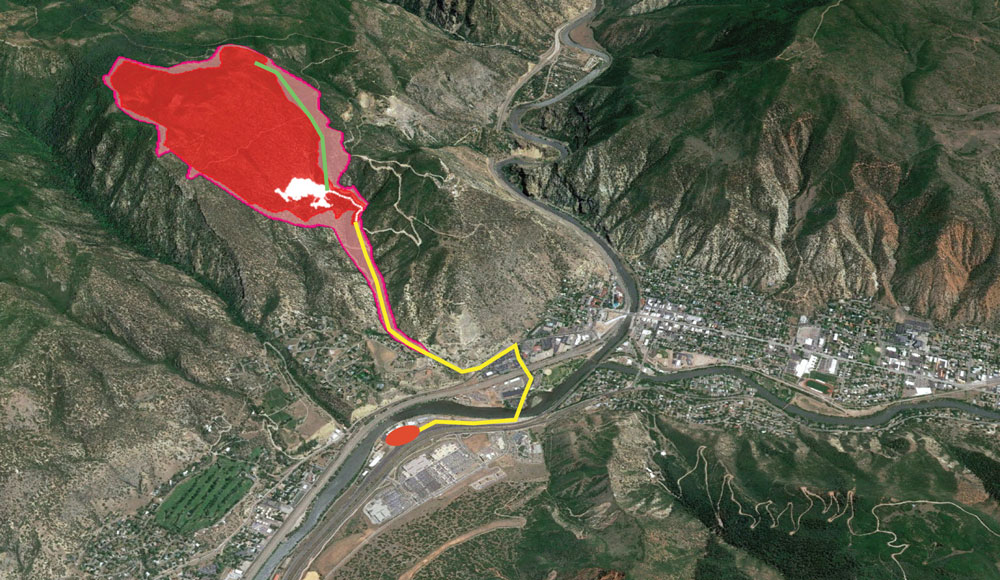
- Red area: Proposed 321-acre mine expansion area. (excavation 175 feet deep).
- Pink area: Proposed 447-acre mine permit area on BLM-managed public land.
- White area: Existing quarry, about 20 acres. (Quarry permit is for 15.7 acres.)
- Yellow line: Proposed truck haul route on Transfer Trail and Traver Trail, across Highway 6 onto Devereux Road, to the rail yard along the Colorado River.
Key elements of the mine expansion proposal
- Expansion of the permitted 15.7-acre quarry to a 321-acre mine and total permit area of 447 acres.
- Development of a wider haul route along Transfer Trail, from the mine to Highway 6.
- Blasting and crushing 5 million tons of rock per year over the next 20-plus years.
- Operations seven days a week, year-round.
- Truckloads of rock hauled down Transfer Trail, across Highway 6 and across the Devereux Bridge to the railyard. The proposed rate of mining would result in up to 450 round trips per day.
- RMI intends to load the limestone onto rail cars and ship the material across the Continental Divide to its rail load-out facility east of Aurora.
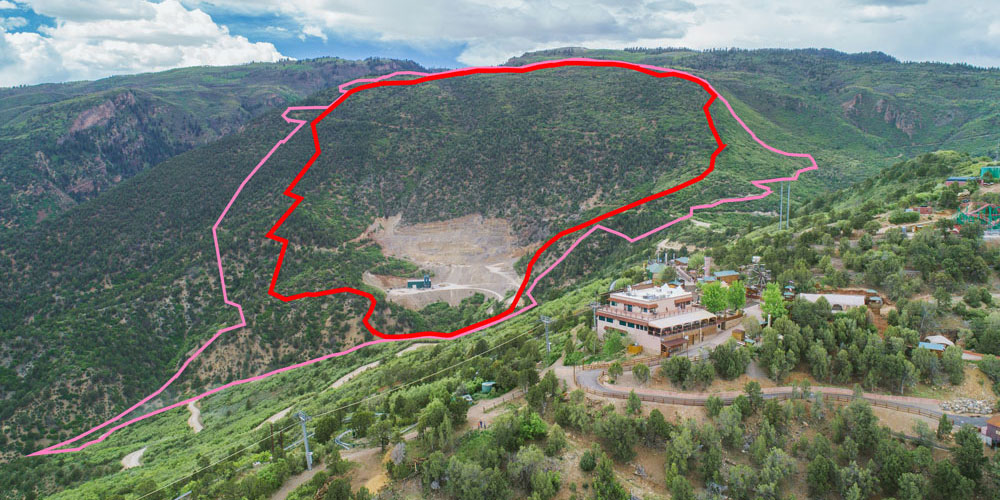
The proposed limestone mine expansion would cover 320 acres of the mountainside, shown by the red line. The mine expansion would create a permanent scar on the landscape, and would be visible from much of Glenwood Springs. This view shows the proximity to the Glenwood Caverns Adventure Park, at right.
Impacts of the Mine Expansion
- A mine scar running 1,800 vertical feet down the mountainside, visible from most of Glenwood Springs.
- Constant truck traffic between mine and rail yard, one truck each direction every 96 seconds, 6 a.m. to 6 p.m. daily.
- Noise from rock blasting, crushing, loading and hauling.
- Potential risk to to the delicate groundwater network feeding the area’s hot springs aquifers.
- Dust, air pollution and carbon emissions.
- Consumptive use of water to control dust at the mine.
- Potential risk of polluted storm runoff or debris flows from the exposed mine area.
- Obliteration of the Witches’ Pantry Cave and other karst formations.
- Destruction of habitat for wildlife, including deer, bighorn sheep, bear, mountain lion, bald eagles, hawks, songbirds and bats.
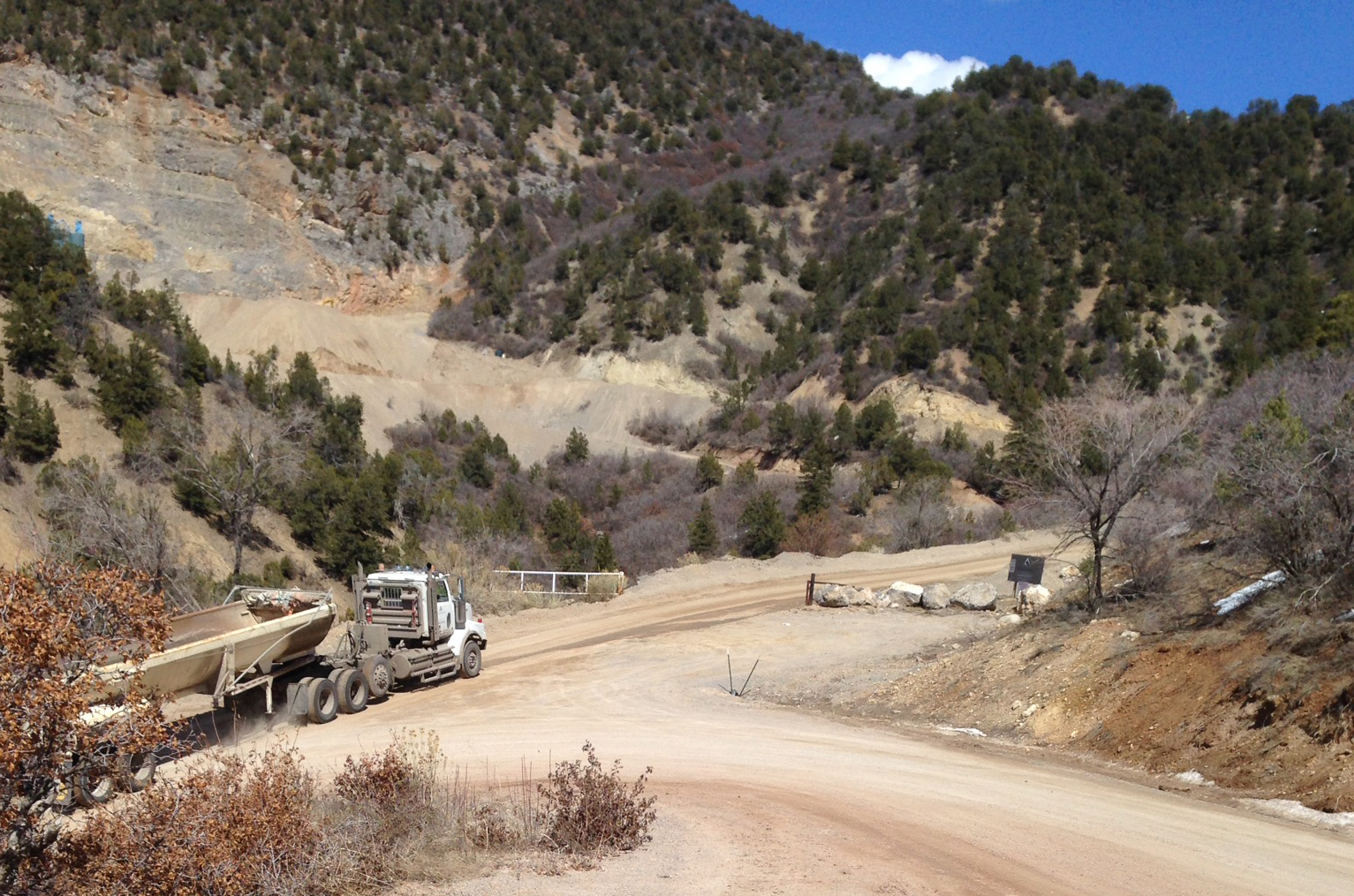
The proposed mine expansion includes constant truck traffic between the mine and the rail yard along the Colorado River. Hauling the proposed amount of limestone, 5 million tons per year, would require one truck moving in each direction every 96 seconds, 6 a.m. to 6 p.m. daily.
Consequences of the Mine Expansion
- Long-term daily impacts to quality of life for residents and visitors.
- Acute impacts to vital tourist attractions: Glenwood Caverns Adventure Park, Iron Mountain Hot Springs and Glenwood Hot Springs Lodge & Pool.
- Disruptions to boating, fishing, activities at Two Rivers Park, and recreation on Transfer Trail.
- Severe community effects, including truck traffic, dust, noise, light pollution, health risks, and a permanent, unsightly mine scar.
- Congestion and road damage from heavy truck traffic.
- Decline in property values, tax revenues and community vitality.