Garfield County Permit Enforcement
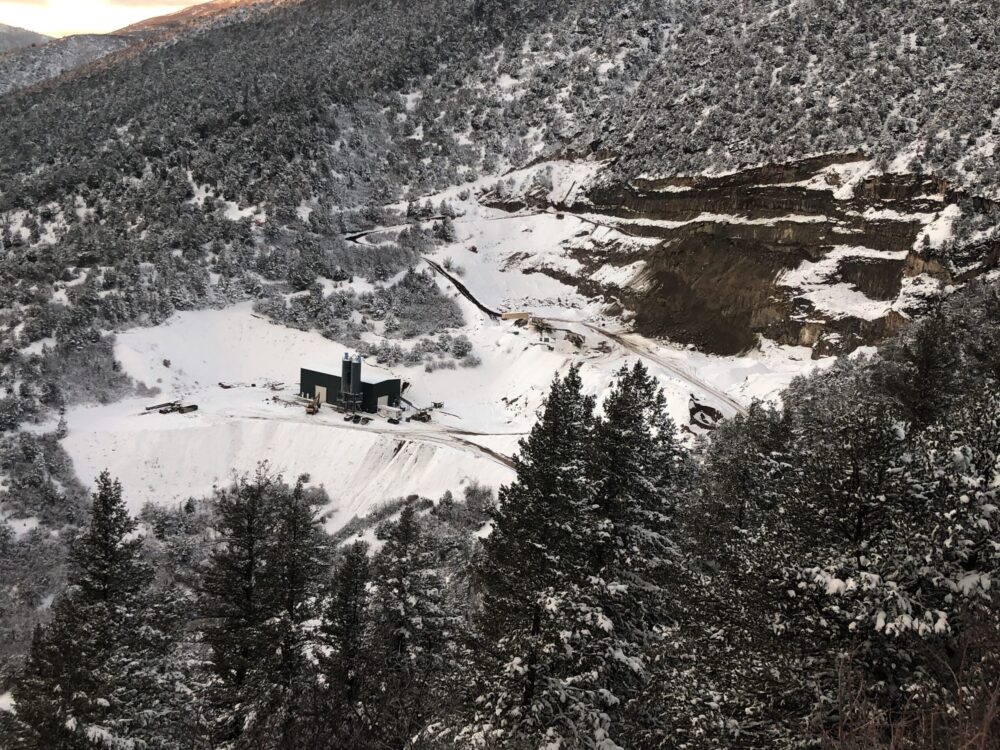
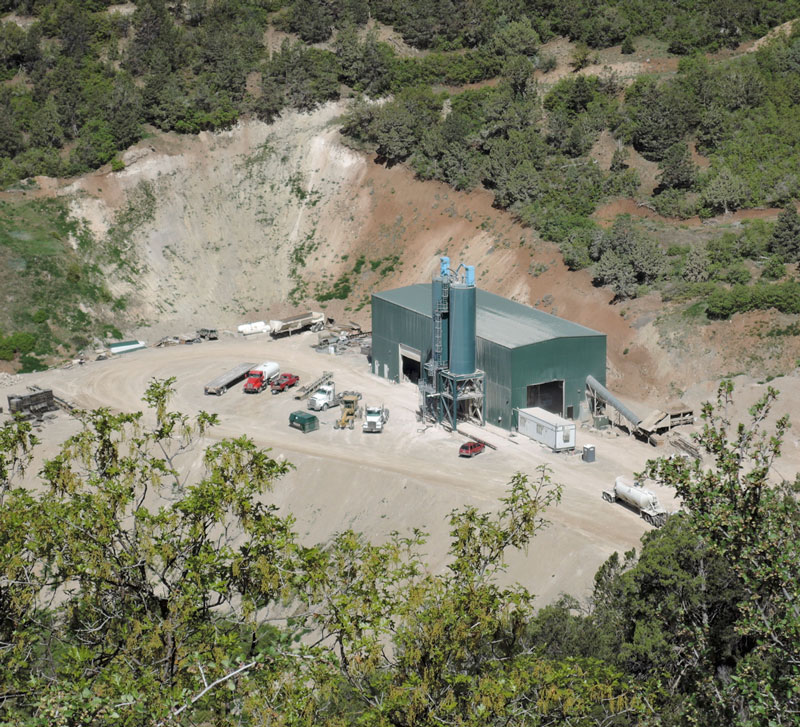
In the fall of 2018, a few months after RMI announced its proposed mine expansion plan, the Glenwood Springs Citizens’ Alliance (GSCA) asked Garfield County to review operations at the quarry. We suspected that several aspects of the mining operation did not comply with the special use permit that Garfield County issued for the quarry.
The county permit was first issued in 1982, when the coal mining company Mid-Continent Resources first opened the quarry. Garfield County amended the permit for the quarry in 2009, when CalX purchased the mining operation from Mid-Continent.
To verify our complaints, the Garfield County Commissioners directed county staff to review quarry operations and report back in 90 days. On March 25, 2019, the commissioners heard the staff report, along with public comments. On April 22, 2019, the commissioners held a formal public review meeting. More than 200 people attended.
Five areas of non-compliance
The three commissioners — John Martin, Tom Jankovsky and Mike Samson — found five aspects of RMI’s current quarry operations to be out of compliance.
- The size of the quarry had grown to about 20 acres, exceeding the permitted size of 16.3 acres.
- RMI was mining and selling limestone for purposes not included in the county’s 1982 or 2009 permits. The limestone was only to be used for industrial purposes in coal mines and coal-fired power plants, but RMI was found to be selling it to other customers for road base and retaining walls.
- RMI continued to conduct rock-crushing operations during the winter closure period of Dec. 15 to April 15.
- RMI was not adhering to a maintenance plan for Transfer Trail, which had been in place since 2009. The plan was intended as a cooperative agreement with the Glenwood Caverns Adventure Park on shared use of Transfer Trail. Caverns owners contended that RMI had not reduced noise by enclosing its milling operation, didn’t use “discriminating” back-up beepers, and didn’t follow the plan for two-way radio communications on the narrow, winding road.
- RMI drilled several exploratory holes in the quarry area without obtaining necessary approvals.
On May 13, 2019, Garfield County issued a formal Notice of Violations, citing the five areas of non-compliance. The commissioners set a June 1, 2019, deadline for RMI to bring its operation into compliance.
RMI sues Garfield County rather than comply with permit
Rather than comply, RMI sued the county in May 2019. The suit alleged that Garfield County did not have environmental regulatory authority over mining operations on federal lands.
The City of Glenwood Springs intervened in the case in early 2020, siding with Garfield County.
In January 2021, Garfield District Judge Anne Norrdin upheld three of Garfield County’s citations: expanding the quarry beyond the permitted 16.3 acres, crushing rock during the winter closure period, and for not cooperating with the Glenwood Caverns Adventure Park on shared use of Transfer Trail.
In June 2021, Judge Norrdin followed up with an order granting Garfield County’s motion for summary judgment, effectively ending the case.
In her order, Judge Norrdin ruled that the county special use permit “does not authorize unrestricted or unregulated mining activities by RMI, nor does it insulate RMI from action by the County Commissioners.”
She also firmly rejected RMI’s allegations that the three County Commissioners were biased in their handling of the permit violations.
In August 2021, RMI appealed the judge’s decision to the Colorado Court of Appeals. The parties filed various briefs and responses during 2022. Further action by the appelate court is pending.
Garfield County enacts strict new 1041 mining regulations
In 2020, while the RMI v. Garfield County lawsuit was moving through the court process, Garfield County worked to enact new mining regulations.
In May 2020, the County Commissioners voted unanimously to enact new standards for mining operations using Colorado’s 1041 review process.
The standards give Garfield County government clear and detailed authority to protect the environment and public health, safety and welfare from negative impacts of mining.
The standards are grouped in a single section of the Garfield County Land Use and Development Code, Article 14, replacing various pieces of regulation that were scattered throughout the code.
Under the standards, mining companies are given clear expectations for earning permit approvals and running mining operations over time.
Glenwood Springs Citizens’ Alliance strongly supported the county’s work in developing these new mining standards.
Rocky Mountain Industrials will have to follow the new standards if or when it applies for a county permit for its proposed mine expansion.